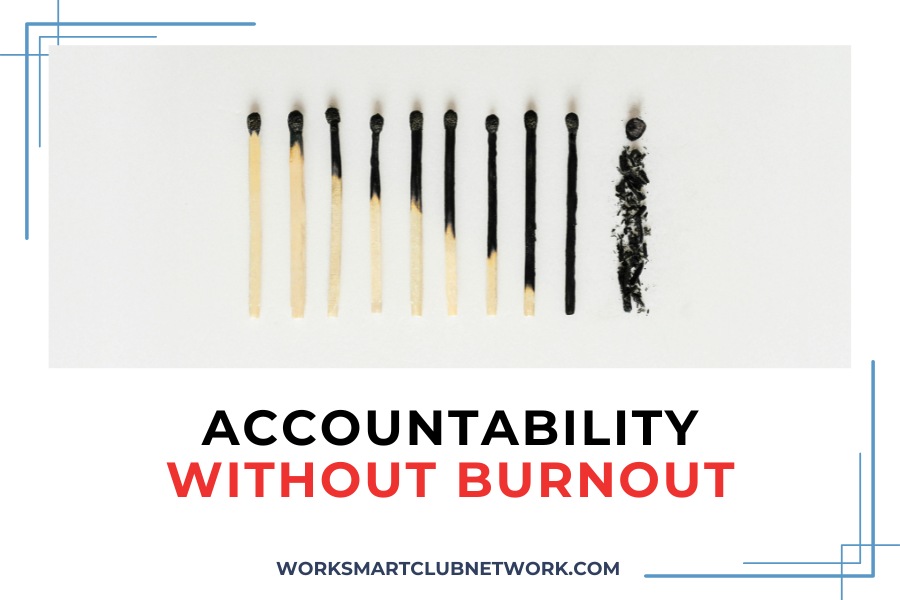
In 2026, leadership will look very different from what it was just a few years ago. Organizations are operating in a world where hybrid work is the norm, AI accelerates almost every workflow, and employee expectations continue to evolve. However, creating an environment built on accountability without pushing teams toward burnout remains a constant challenge for many organizations. Successful leaders have proven that high performance and individual well-being do not need to conflict. With the right approach, they can instead reinforce each other.
Redefining Accountability
Redefining what accountability actually means is the first step toward this. True accountability is no longer reliant on oversight, correction, or consequence; instead, it is heavily rooted in clarity, where goals, ownership, and expectations are clearly outlined and defined. When people understand the “why,” “what,” and “how” behind their work, pressure turns into empowerment. This clarity reduces the mental strain that uncertainty creates, a strain that has long contributed to burnout. In today’s leadership landscape, clarity isn’t micromanagement but is instead a sign of respect for the team and the work they need to do.
Integrating AI
Additionally, integrating AI into daily operations can simplify how work gets done and reduce the possibility of burnout. Savvy leaders use AI not to replace meaningful human contributions but to eliminate unnecessary busywork. Automation now handles reports, meeting summaries, data analysis, and routine decision support, allowing people to focus on creativity, problem-solving, and relationship-building, which is the work that truly moves organizations forward. By positioning AI as a supportive partner rather than a threat, leaders ensure teams feel more energized and better equipped to take ownership of their results, making accountability more natural and sustainable.
Psychological Safety
This evolution in leadership is also grounded in psychological safety. Accountability driven by fear is no longer viable in organizations that want to thrive. Instead, leaders who cultivate an environment where varying opinions are welcomed, experimentation is encouraged, and mistakes are viewed as part of the learning process build successful teams where accountability is not only valued but also respected. When people feel safe, they speak up sooner, allowing leaders to intervene before stress escalates into burnout. In this environment, accountability grows not from pressure but from trust.
Personalized Leadership
Finally, embracing personalized leadership ensures that leaders are playing to their team’s strengths, further reducing the possibility of burnout. Each team member has unique working styles, stress triggers, and motivational drivers, and as a result, leadership is not a one-size-fits-all approach. Regular check-ins, data-driven insights, and honest conversations allow leaders to tailor support to each individual and each team. This personalized approach deepens accountability by reducing overwhelm and increasing ownership in ways that feel authentic and human.
Accountability without burnout is no longer an ideal but has become a standard. By prioritizing clarity, leveraging AI wisely, nurturing psychological safety, and embracing personalized leadership, we see that teams don’t just perform better under these conditions; they thrive.