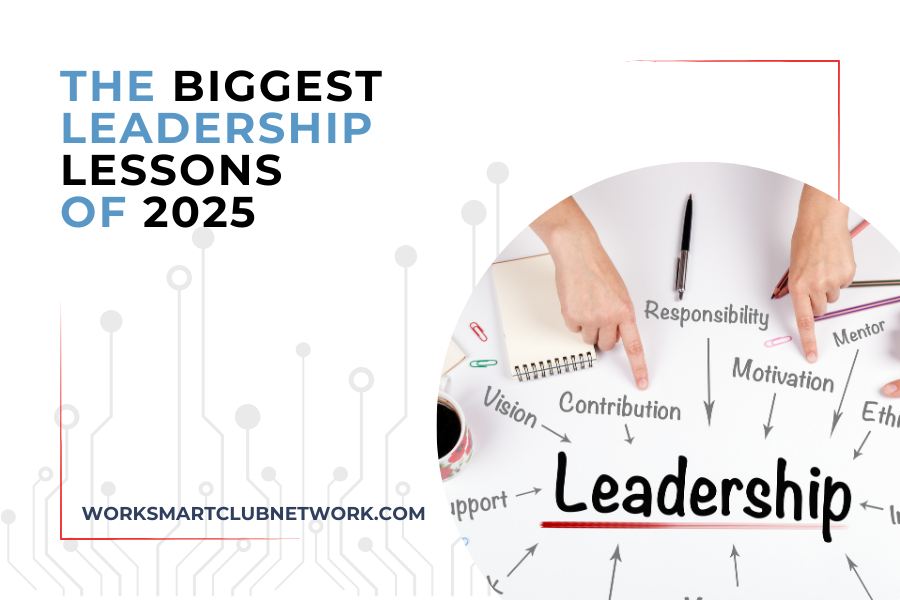
As we approach the end of 2025, leaders everywhere are taking stock of a year that has been as demanding as it has been transformative. The pace of change didn’t slow down; it accelerated as the leadership landscape shifted with layoffs, rightsizing, and resignations. Teams faced new challenges, especially with hybrid workplaces, remote work, and technology. AI advancements are shaking the workplace and business as usual. The mental and emotional demands on leaders reached new heights.
Managing Distraction:
One of the most urgent leadership lessons of 2025 is recognizing how deeply distraction undermines the brain and leadership effectiveness. As Dr. Cynthia Howard explains in The Work Smart Principle: A Framework for Leaders to Manage Time & Energy, our brains now process thirty-four gigabytes of information daily—enough to crash a laptop in a week. With smartphones streaming an average of twenty-three words per second, leaders are drowning in constant information overload. Yet research shows that despite unprecedented access to data, learning is declining and memory is deteriorating. Continuous exposure to new stimuli prevents the brain from consolidating information, a phenomenon researchers call digital dementia.
This overload hampers clear thinking, empathy, and sound decision-making. The brain becomes mentally “flabby,” as noted by Dr. Howard, fueling irritability, emotional hijacking, and overwhelm. Focus, therefore, is a true superpower. Many leaders never fully regain focus once interrupted, often redoing tasks they’ve already started but forgotten. Focus is the key determinant of capacity; without it, work slows, quality suffers, and energy drains. For leaders making high-stakes decisions, this cognitive erosion is a serious threat, therefore making it imperative to manage distractions.
Navigating Disruption:
Disruption has become a constant, not an occasional challenge. Whether it’s technological advances, economic shifts, or global events, leaders are facing unprecedented levels of change. The biggest lesson here is that resisting disruption is futile; thriving in it is the new standard. Dr. Cynthia Howard’s Work Smart Principle provides a GPS-like model for staying centered amid change. This principle highlights that in order for a leader to successfully remain centered, it is important to first set one overarching goal, set 3 main priorities based on this goal, and create the strategies that need to take place for achievement. Instead of resisting upheaval, smart leaders lean into it, building resilient systems, adapting proactively, and keeping a long-term vision in view.
The Value of Time:
In 2025, as technology evolves, markets shift, and remote work remains a fixture, leaders who embed resilience into their teams are better equipped to pivot without panic and to use disruption as a springboard, not a setback. Dr. Howard indicates that intention and purpose conserve energy to manage time. Working smart today requires more than efficiency; it demands understanding the true cost and value of time. Based on Dr. Howard’s writings, distraction creates a false sense of urgency, pulling leaders away from meaningful work. It is important that leaders keep in mind that any task carries an opportunity cost. When leaders overlook this, they fall into busyness instead of making intentional decisions that create impact. Valuing time means prioritizing purposeful work, nurturing relationships, protecting well-being, and eliminating non-value activities. Since time is the only resource leaders cannot replace, intentional focus gives them more of it through clarity and deliberate action.
The lessons of 2025 reveal that leaders who master their attention, embrace disruption, and value their time gain the greatest advantage. As change accelerates, those who work smarter through clarity, focus, and intention will shape the future.